
Winter in Melbourne does not announce itself with a dramatic entrance. It arrives gradually, week by week, in the form of grey skies, longer nights, and teams that stop stepping outside. And while most businesses prepare for the colder months by stocking up on hand sanitiser or adjusting heating settings, there is one operational gap that consistently goes unaddressed until it is already costing the business: The standard of cleaning inside the office.
What actually changes in your office when winter arrives
Most managers assume the office functions the same in July as it does in February. The layout is identical. The routine looks the same. The cleaning company shows up on the same schedule.
But the conditions inside the office are fundamentally different.
When temperatures drop, people stay indoors. Teams that typically moved between meetings, lunch spots, and client visits now remain concentrated in the same closed space for longer stretches of the day. Ventilation systems run continuously. Humidity builds up on surfaces. The density of human contact with shared areas, from kitchens to meeting rooms to bathrooms, increases significantly.
This is exactly the environment where viruses and bacteria circulate most efficiently.
The cleaning protocol that was adequate for summer is no longer sufficient. Yet, in the majority of Melbourne offices, it is never revised.
The signs that are already present in your office
The deterioration of a cleaning standard does not happen all at once. It builds slowly, and by the time it becomes visible enough to act on, the operational impact is already in motion.
Your team is getting sick more frequently
An uptick in sick days and medical certificates during winter is often treated as inevitable. It is not. A significant portion of respiratory illness transmission in shared office environments is directly linked to surface contamination and inadequate hygiene in high-traffic zones.
Keyboards, door handles, bathroom taps, communal coffee machines, meeting room chairs. These surfaces accumulate bacteria between cleaning cycles, and in winter, with reduced ventilation and increased occupancy, the transmission rate accelerates. When cleaning frequency and technique are not adjusted to meet this demand, the office becomes a vector rather than a controlled environment.
Surfaces appear clean but are not hygienically maintained
There is a meaningful difference between a surface that looks clean and a surface that has been properly sanitised. One relies on aesthetics. The other relies on process.
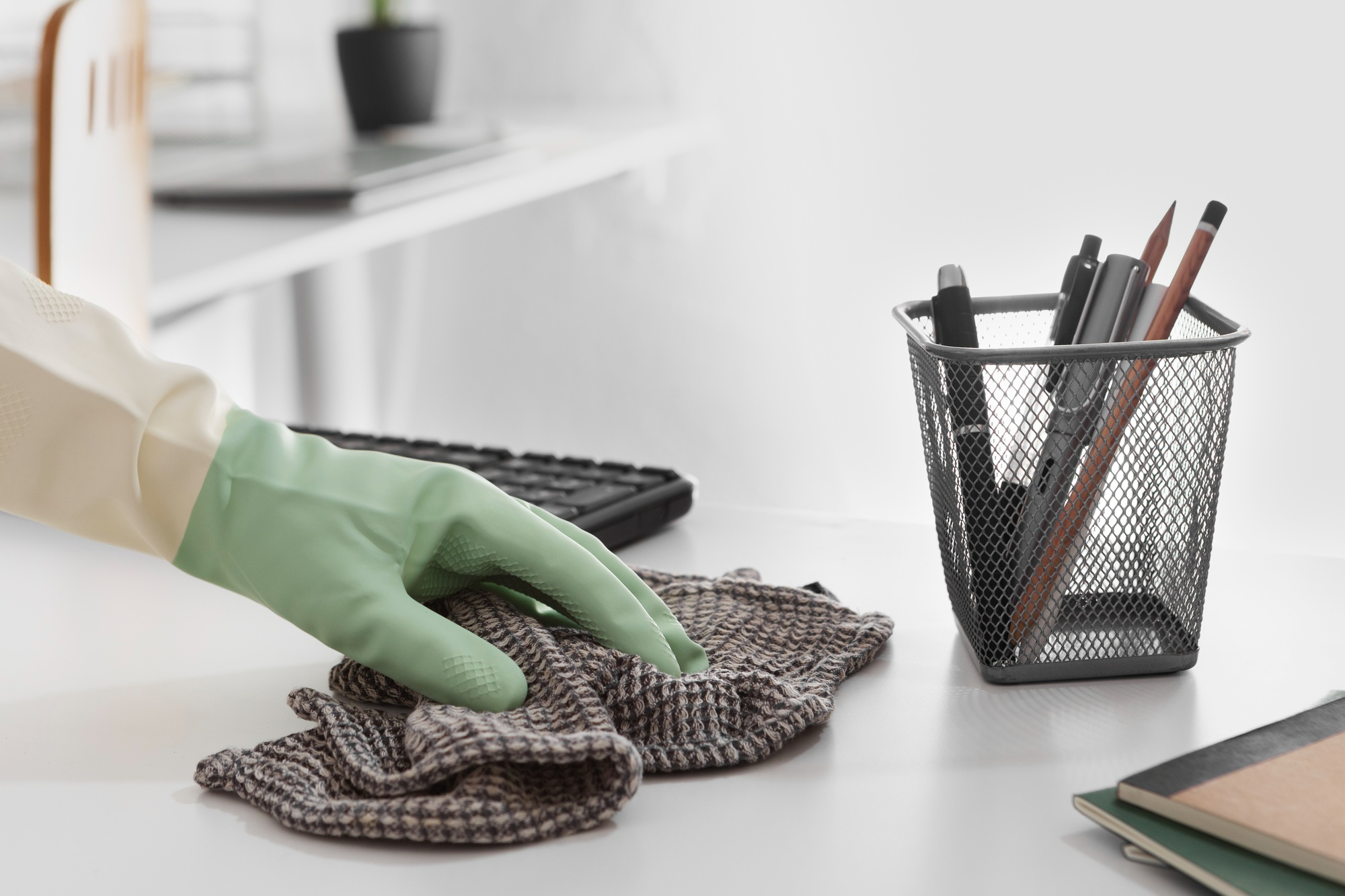
Most standard cleaning routines prioritise visible areas: floors, bins, obvious spills. What they fail to consistently address are the high-contact points that accumulate the most bacteria but require deliberate attention. Desk surfaces, light switches, shared equipment, meeting room tables.
In winter, these areas demand more, not less.
The cleaning routine has not been adapted for the season
This is the most common gap. A business sets up a cleaning schedule in March, and by July, it is still running the same protocol. Same frequency, same techniques, same scope.
What changes between summer and winter is the operational demand on the space. Ventilation ducts accumulate more dust and particulate matter when systems run for longer periods. Bathroom areas carry higher contamination risk. Kitchen zones see increased use as teams eat indoors rather than outside. None of this is reflected in a static cleaning routine.
The cost of ignoring these signals
The consequences of an inadequate winter cleaning standard are not limited to hygiene.
Productivity declines before the problem becomes obvious. An environment that is physically uncomfortable, stuffy, or poorly maintained generates a low-level fatigue that affects focus and output. Teams normalise the discomfort without articulating it. Management rarely connects it to the cleaning standard.
The impact on team wellbeing accumulates. Beyond illness, working in a space that does not meet a basic standard of hygiene increases stress and dissatisfaction. It is a quiet but consistent drag on the experience of working in that office.
Clients and visitors notice what your team has stopped seeing. When a space is managed day to day by the same people, visual normalisation occurs. Standards that have slipped become invisible to those inside the business. They are not invisible to someone walking in from outside.
What an adequate winter cleaning standard looks like
Preparing an office for winter is not a single deep clean. It is an adjustment to an ongoing operational process.
A structured approach includes reviewing and increasing the frequency of cleaning in high-contact zones, incorporating products and techniques specifically designed for virus and bacteria control, and ensuring that ventilation systems, bathrooms, and kitchen areas receive dedicated attention beyond what the standard routine delivers.
The distinction that matters most here is between cleaning that is responsive and cleaning that is structured. Responsive cleaning reacts to visible problems after they appear. Structured, recurrent cleaning prevents them from becoming operational issues in the first place.
When a professional commercial cleaning provider manages this process, the business does not need to monitor, supervise, or follow up. The system runs, the standard is maintained, and the team can focus on the work they are actually there to do.
The window most businesses miss
By the time a Melbourne winter is in full effect, the operational cost of an inadequate cleaning routine is already accumulating. Sick days are up. The environment is more difficult to manage. And revising a cleaning protocol mid-winter is harder than setting the right one before the season begins.
The correct time to review the cleaning standard for your office is now, before the problem installs itself.
A straightforward starting point is to assess whether the current provider has made any seasonal adjustments to the scope, frequency, or technique of the service. If that conversation has not happened, it is a reliable indicator that the routine has not changed.
Businesses that operate with a professional commercial cleaning partner, built on recurrence and structured delivery, arrive at winter without surprises. The standard is already in place. The protocols are already adapted. And the team is already protected.
The New Black Cleaning delivers recurrent, structured commercial cleaning services for Melbourne businesses. If you would like to review the current standard of your office before winter, contact us here.