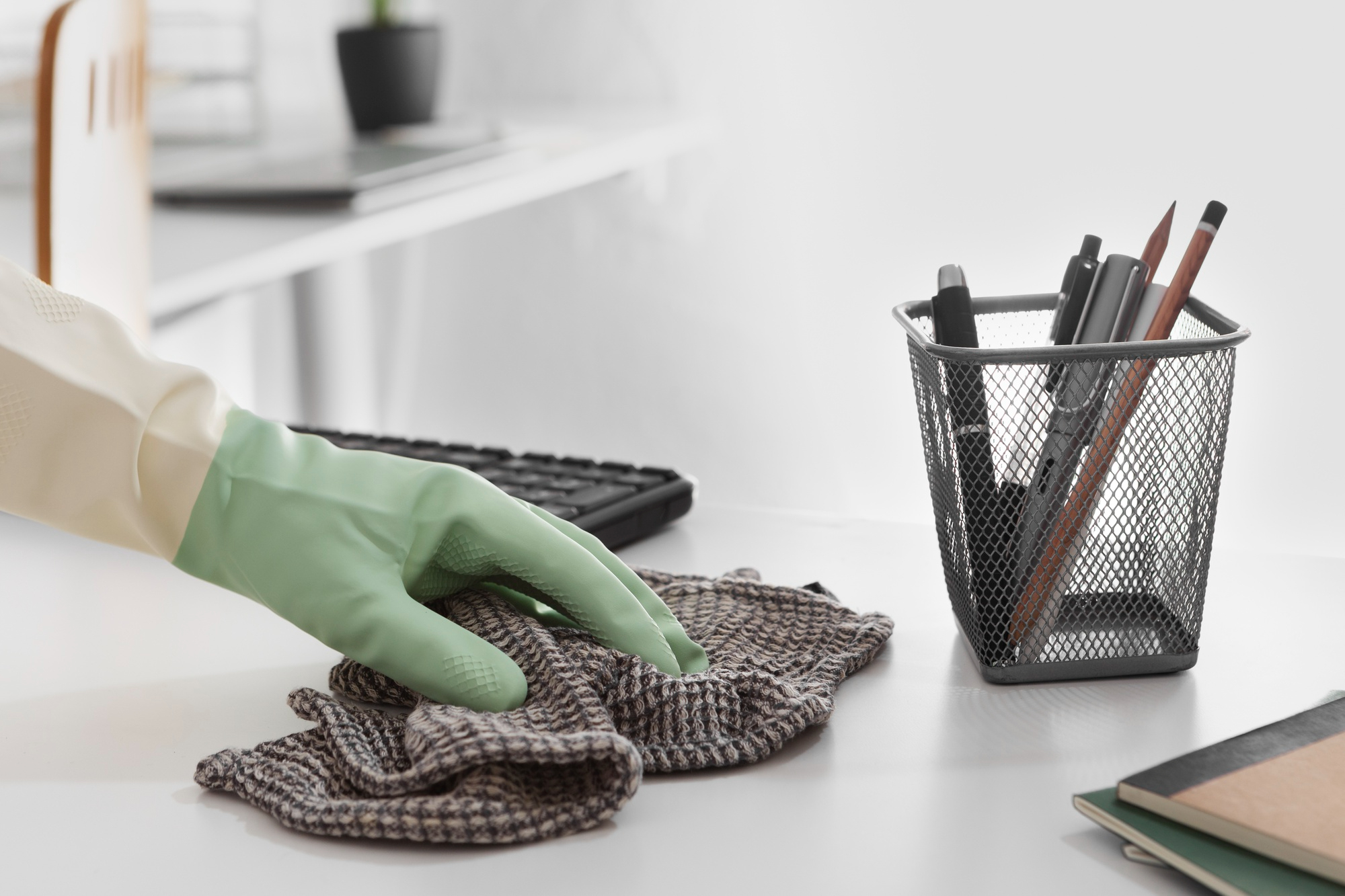

October is here, and so is National Safe Work Month.
If you manage an office in Melbourne, this is not background noise. It is a direct prompt to review how your business is actually managing workplace safety, not just in the areas that feel obvious, but across every operational dimension that affects the people working in your space every day.
This article is a practical guide. It covers what Safe Work Month is, what the 2026 theme means in concrete terms, and what each of the four thematic weeks is asking your business to do. If you arrived here via a search and need the essentials fast, you are in the right place.
What is National Safe Work Month?
National Safe Work Month runs every October across Australia, coordinated by Safe Work Australia. Its purpose is to renew the commitment of employers, employees, and organisations to creating workplaces that are genuinely safe and healthy, not just compliant on paper.
It is important to understand what this campaign sits inside. National Safe Work Month is not a voluntary initiative or an awareness drive with no regulatory weight behind it. It operates within the Work Health and Safety framework that governs the legal obligations of every employer in Australia. Engaging with the month is an opportunity to align your internal practices with those obligations before a gap becomes a liability.
The numbers that provide context for why this matters:
In 2024, 188 workers in Australia died from traumatic workplace injuries. In the 2023 to 2024 financial year, there were 146,700 serious workers’ compensation claims, which equals more than 400 claims every single working day.
These figures are not drawn from high-risk industries alone. They reflect workplaces of every type, including commercial offices, clinics, and retail environments.
The 2026 theme: “Safe work is for life”
This year’s theme carries a specific meaning that goes beyond the immediate workplace moment.
“For life” is a declaration about duration and consequence. A workplace injury or a work-related health condition does not end when the incident is recorded or when a compensation claim is lodged. It follows a person into their recovery, their future employment capacity, and their quality of life outside work. WHS, when understood properly, is not a checklist to be completed. It is a system of continuous protection for the people who spend the majority of their waking hours in the environments your business is responsible for.
For an office manager in Melbourne, the practical implication of this framing is straightforward: the way you manage your workplace environment today is directly connected to the health outcomes of your team over time. That includes the physical standard of the space, not just the visible safety procedures.
The four thematic weeks: A quick reference
Each week of October carries a distinct focus. Here is the structure at a glance:
| Week | Theme | Focus |
|---|---|---|
| Week 1 | For Life | Why WHS matters |
| Week 2 | For Health | What WHS protects |
| Week 3 | For the Future | The long-term impact of workplace harm |
| Week 4 | For All | Action across every type of workplace |
Each week is a lens, not a separate programme. Together they build a complete picture of what responsible workplace management looks like in 2026.
Week 1: For Life
Why WHS matters
The first week asks the foundational question: does your business treat WHS as a system or as a set of boxes to tick?
A system approach means that every operational area of the workplace, including those that do not immediately read as “safety”, is assessed for the risks it carries. For an office environment, that includes the physical condition of the space: floor surfaces, air quality, shared contact zones, and the hygiene standard of areas that the entire team uses throughout the day.
Wet or slippery floors, contaminated surfaces, and accumulated residue in high-traffic areas are not minor housekeeping issues. They are physical and biological risks that, when left unaddressed, sit outside the WHS framework as unmapped hazards.
Practical action for Week 1: Audit the physical risk points in your environment. Include cleaning in that audit, and ask specifically whether it is documented as a protocol or managed as a reactive task. If it is the latter, it is a gap in your WHS mapping.
Week 2: For Health
What WHS protects
The second week broadens the definition of what WHS is protecting. Safety in the workplace is not only about preventing acute incidents. It is about protecting the ongoing health of every person in the space, including the slower, cumulative effects of a poorly maintained environment.
For office teams, this means exposure to biological agents that build up on shared surfaces, air quality affected by ventilation systems that are not properly maintained, and the immune load placed on a team that works in a space with an inconsistent hygiene standard. These effects do not show up on an incident report. They show up in absenteeism patterns, in the frequency of respiratory illness during winter months, and in the low-level fatigue that becomes normalised over time.
Practical action for Week 2: Review the current cleaning service for your office. Assess whether the frequency and scope of the service covers high-contact and high-risk areas, including kitchens, bathrooms, meeting rooms, and shared workstations. If that scope is not defined in a written agreement, it is not reliably being delivered.
Week 3: For the Future
The long-term cost of an unmanaged environment
The third week asks businesses to think beyond the immediate. What does an environment that is managed reactively cost over time, not just in a single incident, but across 12 months of accumulated gaps?
Recurring absences, reduced productivity, team fatigue, and the slow degradation of a professional standard are not separate problems. They are the compounding output of an environment that is not being actively maintained to a defined standard.
An inconsistent cleaning protocol creates conditions where risk builds gradually and invisibly. A contaminated kitchen surface is a biological risk. A bathroom that is cleaned when someone complains is not a managed hygiene environment. A ventilation system that accumulates particulate matter is an air quality issue that no one has mapped.
Each of these gaps is manageable in isolation. Together, they represent an ongoing operational cost that a structured cleaning programme would eliminate.
Practical action for Week 3: Compare the cost of a structured, recurrent commercial cleaning contract against the accumulated cost of managing the current arrangement reactively. Include absenteeism, internal management time, and the reputational cost of an environment that does not consistently meet a professional standard.
Week 4: For all
WHS applies to every workplace, including yours
The final week addresses one of the most persistent misconceptions in WHS management: that workplace safety is primarily a concern for construction sites, manufacturing environments, and industries with visible physical risk.
Every workplace where people spend their working hours is subject to WHS obligations. Melbourne offices, medical clinics, law firms, and commercial spaces carry the same legal responsibility to provide a safe environment as any other sector. The risks are different in nature, but they are real, and they are regulated.
The implication for office managers is direct: if your cleaning arrangement does not meet the standard of a documented, structured protocol with defined frequency and scope, it is not meeting the requirements of a properly managed WHS system, regardless of how the space looks on any given day.
Practical action for Week 4: Formalise your cleaning protocol as part of your WHS documentation. This means a written scope of service, a defined frequency for each area of the office, a named responsible party, and a service provider who can be held accountable to those specifications. A recurrent commercial cleaning contract is the most direct way to close this gap with a single operational decision.
What to do this week: A starting point for October
If you are reading this at the start of October and want a clear entry point, here is the minimum review any Melbourne office should complete before the month ends:
Confirm whether cleaning is included in your current WHS risk mapping, or whether it is treated as a separate operational task with no formal connection to your compliance framework.
Check whether your existing cleaning contract specifies frequency, scope, and area-by-area responsibilities. If the arrangement is informal or verbal, it is not defensible as part of a WHS audit.
Identify any areas of your office that are not currently covered by the cleaning routine, particularly high-contact zones such as entry points, shared kitchenware, meeting room surfaces, and bathroom fixtures.
What comes next in this series
Throughout October, The New Black Cleaning will be publishing a series of articles that go deeper into each of the four weekly themes, with specific focus on how commercial cleaning functions as a structural component of WHS for Melbourne businesses.
If this article has raised questions about how your current cleaning arrangement sits within your WHS obligations, the following pieces in the series are worth reading. You can follow along on the blog and on our LinkedIn page.
And if your business is ready to move from a reactive cleaning model to a structured, recurrent commercial cleaning solution, get in touch here. The conversation starts with an assessment of your current setup, and it requires no commitment beyond that first step.